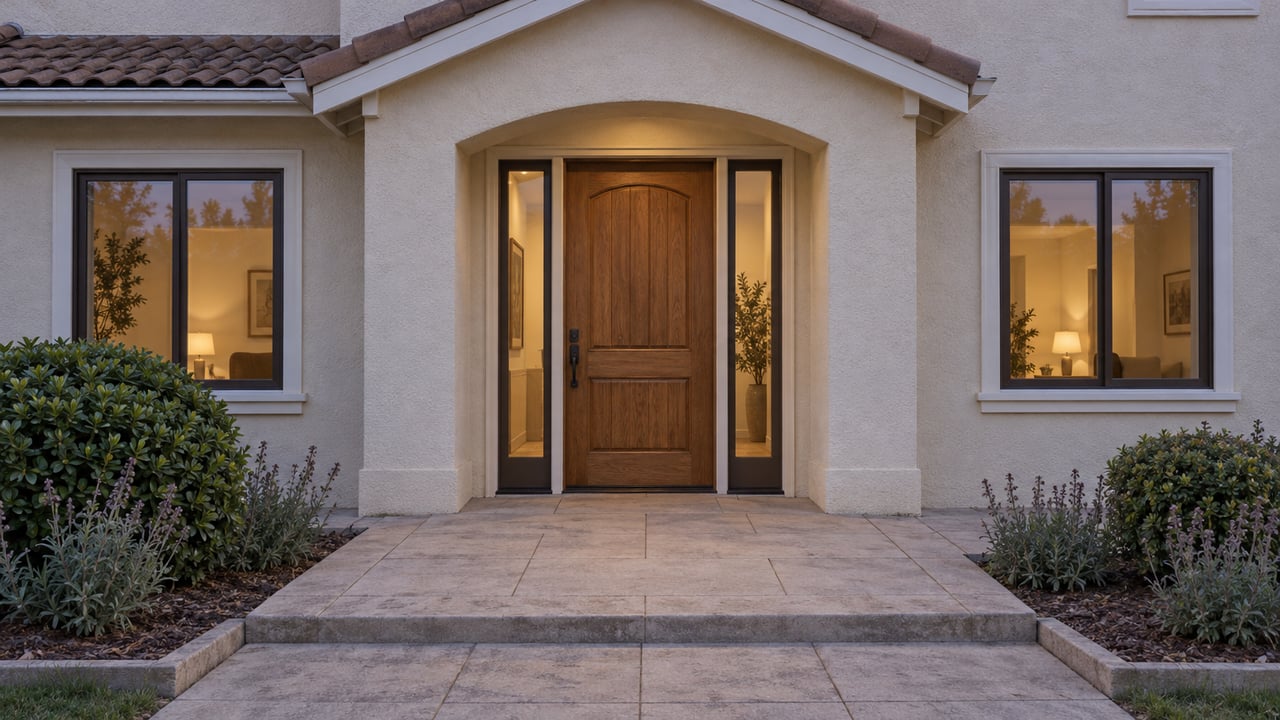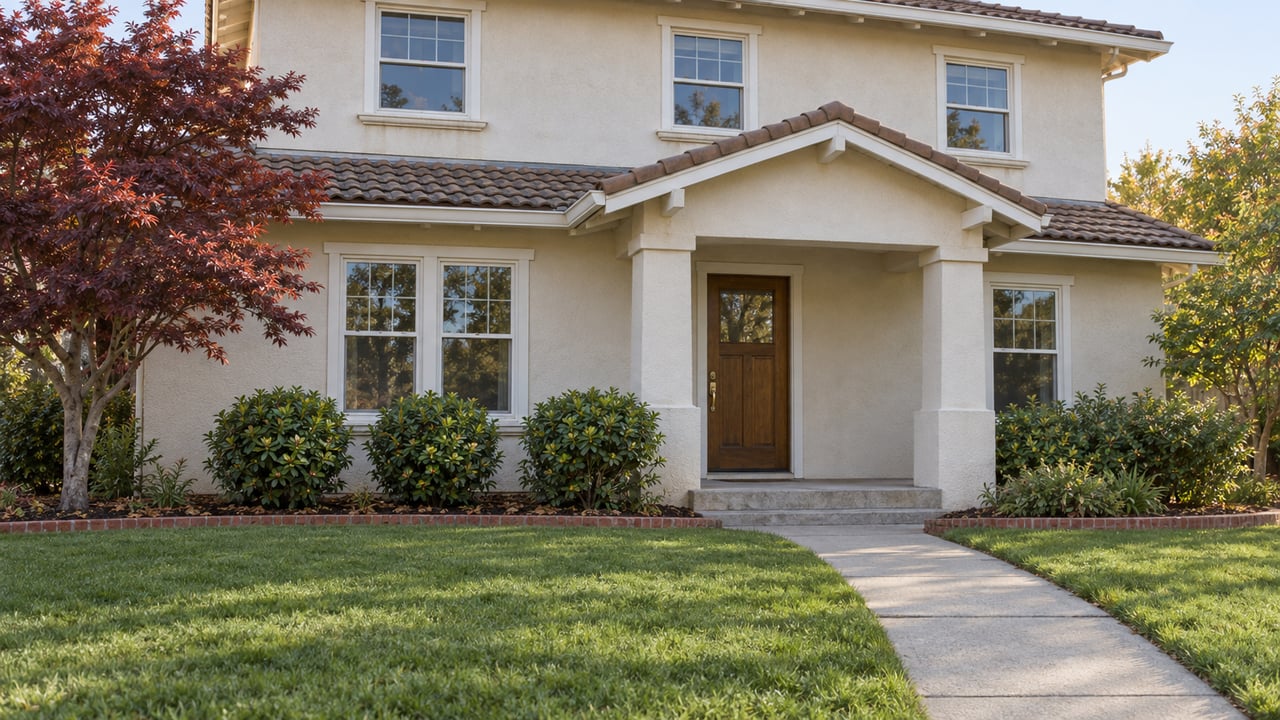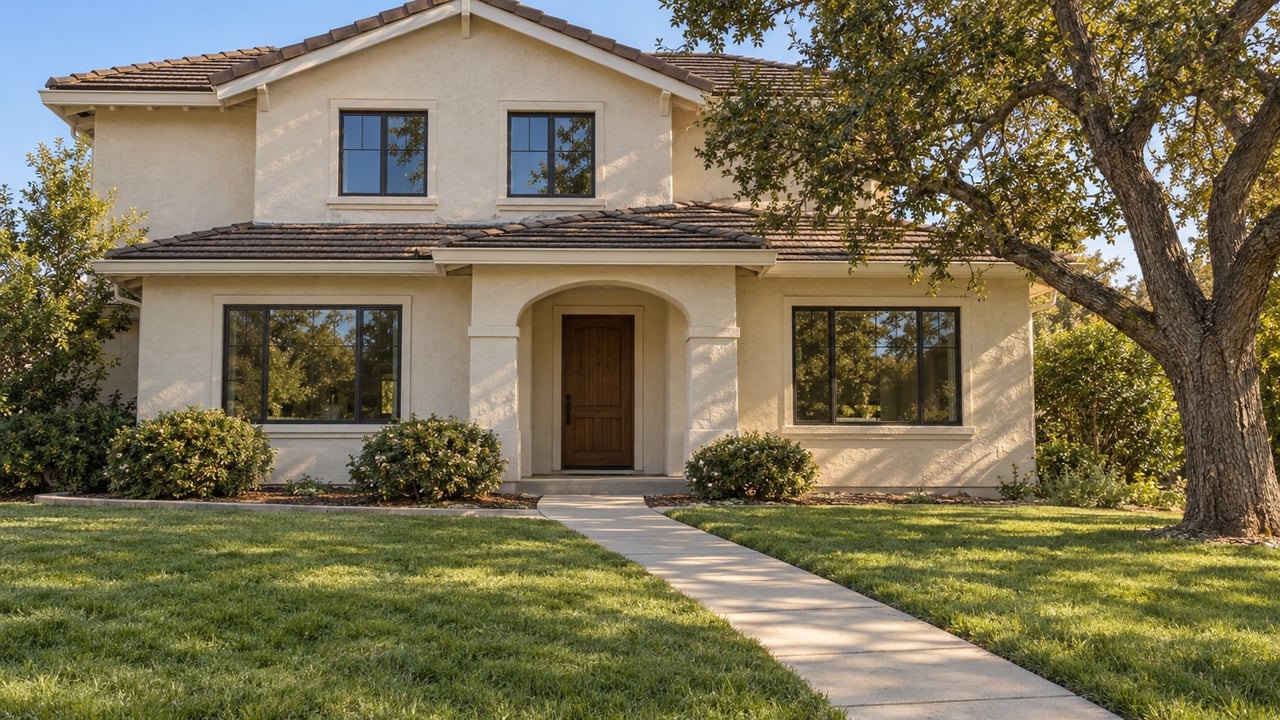
If you have been comparing Lagoon Valley new construction to a resale in Browns Valley, Cordelia, or an older Vacaville tract, the list prices probably look close enough to call it a wash. They aren't. The gap sits below the sticker, on the second page of the property tax bill, and inside a build-out schedule that runs into 2027.
This is a post about what actually changes when you buy inside the boundaries of Community Facilities District 13 instead of a resale on the other side of the freeway.
The number that doesn't show up on the listing sheet
Vacaville's resale market is roughly stable. Over the three months ending May 2026, Vacaville home prices were up 1.2% compared to the same period last year, selling for a median price of $627K, and homes are moving in 80 days with a 1.06-month supply of inventory and properties selling for 98.6% of asking. That is a balanced market with predictable carry costs on a resale home.
New construction inside Lagoon Valley carries a second line item most buyers underweight until it hits their tax bill. Here is what the difference looks like when you compare identical-price homes:
| Line item | Vacaville resale (typical) | Lagoon Valley new build |
|---|---|---|
| Base 1% ad valorem tax | Yes | Yes |
| Mello-Roos / CFD special tax | Usually none | Yes, CFD 13 Lower Lagoon Valley |
| Annual CPI adjustment on that special tax | N/A | Adjusted annually and continuing in perpetuity for the services portion |
| Deductible on federal returns | Base tax typically yes | CFD portion generally not, because it is not ad valorem |
| Amenities you can use today | Whatever was built when the home was built | Some now, most later |
The base list price is only the first of two prices you agree to pay when you close on a Lagoon Valley home.
What CFD 13 actually paid for
Lagoon Valley sits on ground that had no municipal infrastructure before Triad Development started building. Water, sewer, streets, storm drains, and the fire station all had to be trenched in from scratch. That work was financed the way most large new California developments finance backbone infrastructure: through a Mello-Roos Community Facilities District.
The Lower Lagoon Valley CFD was initially proposed at a bit more than $71 million in bonds to bring in water, sewer, and utilities, which were nonexistent on the site. The City of Vacaville confirms the mechanics on the public side: the special taxes are levied annually as part of each parcel's property tax bill, are subject to an annual inflation adjustment, and do not expire but continue in perpetuity for the services portion of the levy.
Two consequences follow from that structure. First, Vacaville generally uses CFDs to fund the additional police and fire services required to serve new residential development, so a portion of your Lagoon Valley special tax is paying for the fire station and public safety coverage inside the community, not just for buried pipe. Second, when the infrastructure bonds are eventually retired, the maintenance and services portion of the tax keeps going.
None of this is unusual for a California master plan. It is unusual only relative to a Vacaville resale, where the ground was paid off decades ago.
The amenity you're buying isn't the amenity you're moving into
The Lagoon Valley marketing renderings show a championship golf course, a town center with a grocery and restaurants, an event center with pools and pickleball, and an organic farm. Those amenities are the reason buyers pay a premium over comparable Vacaville square footage. Most of them are not open yet.
Here is where the buildout actually stands, based on reporting from late 2025 and current developer information:
- Roughly 150 homes have been built out of just over 1,000 approved, with construction continuing over the next five years.
- A full-size permanent fire station has been built and is fully operational.
- The event center broke ground and is under construction with sports courts, pools, a fitness center, and meeting spaces planned.
- Public and private parks, the 18-hole championship golf course, and a town center with local shops, restaurants, and an organic farm are next in line.
- Whether the golf course opens as public, private, or semi-private will be decided about a year before it opens for play.
- Completion of the 14 distinct neighborhoods is estimated to be 2026 to 2027, with roughly 200 to 225 homes constructed and sold per year.
If you buy a Lilac Ridge, Hawthorn Hills, or Rosemary Grove home this year from Lennar or Taylor Morrison, or a Lavender Glen or Iris Gardens home from D.R. Horton or K. Hovnanian when those open, you are paying full price and full CFD from day one. You are using the fire station and the trail system on day one. You are waiting on the golf course, the town center grocery, the restaurants, and the event center pools.
That is a legitimate trade for buyers who plan to be in the home for ten years. It is a different trade for buyers who are shopping the amenity slide.
Village 1 vs Villages 2 and 3
One more piece of structural detail that rarely surfaces on the builder websites. The community is designed as three distinct villages: Village 1 includes both residential and business uses along with the Town Center and Village Green park and will be a public village with predominantly public streets, while Villages 2 and 3 are private, gated residential villages with private streets.
For a buyer, the practical difference is who maintains your street, who controls access at the gate, and how the HOA governance is structured on your side of the community. Ask which village a specific floor plan sits in before you fall in love with a lot number. The pricing and monthly carry are not identical across the three.
The escrow moment where this becomes real
California protects buyers here, but the protection is time-limited and easy to miss if you are also managing an interest-rate lock and a home inspection. The sequence to know:
- When property is sold, the seller is responsible for providing a Notice of Special Tax to the buyer during escrow.
- The Mello-Roos Community Facilities Act requires that this Notice be delivered within 14 days of opening escrow, and it must disclose the maximum annual tax, the current tax amount, and the conditions under which it may increase.
- If the notice is not provided, the buyer has the right to rescind the purchase agreement within three days of receipt.
On a new-build purchase directly from the builder, the disclosure comes in the sales package. On a resale of an already-occupied Lagoon Valley home two or three years from now, this is the document you actually read, not skim. Look at the maximum rate, not just the current levy. The amount levied in any given year can be below the maximum, so relying on the current tax bill for disclosure purposes understates the ceiling.
You can verify any specific parcel's current CFD assessment through the City of Vacaville's Community Facilities Districts page and the Solano County Assessor by address or APN.
How this changes what your money buys
Zoom back out. If you are choosing between a resale in an established Vacaville neighborhood and a new build in Lagoon Valley at similar list prices, you are choosing between two different products:
The Vacaville resale gives you a known monthly carry, mature landscaping, an amenity set you can walk today, and a market that as of mid-2026 is neither hot nor cold. With 1.06 months of supply and homes selling at 98.6% of asking, both buyers and sellers can expect stable, predictable conditions with reasonable negotiating opportunities on both sides.
The Lagoon Valley new build gives you a higher effective monthly cost after the CFD, a home built to exceed California energy mandates with solar and battery options and gray water recycling that can reduce potable water consumption by up to 50%, and a bet on amenities that arrive on the developer's timeline. For the right buyer, that bet pays. It is still a bet.
Neither product is the correct answer in the abstract. The correct answer depends on how long you plan to hold, how much of your qualifying income the second tax line eats, and whether you actually use the amenities you are buying.
A short FAQ
Does the CFD tax go away when I pay off the mortgage? No. The two are unrelated. Most CFDs have a defined term, typically 20 to 40 years from bond issuance, and once bonds are fully repaid the special tax portion tied to those bonds ends. The services portion, if any, keeps going.
Do lenders factor CFD taxes into what I can qualify for? Yes. Treat the annual special tax as a fixed monthly obligation and disclose it to your loan officer during pre-approval, not at underwriting.
Can I compare Lagoon Valley to older Vacaville CFDs? Only loosely. Methodology varies by district. CFD 1 in Vacaville, the lowest rate, was formed in the 1980s to fund 25% of Fire Station #74. A new master plan with $71 million in bonded infrastructure is a different animal.
If you want a side-by-side that compares a specific Lagoon Valley floor plan against a resale in Browns Valley, Cordelia, or an established Vacaville tract, that is exactly the exercise we run for buyers every week. Start with a free home valuation on your current home, or reach out to Michael Hulsey & Associates and we will build the numbers on both sides of the decision before you fall in love with a lot.