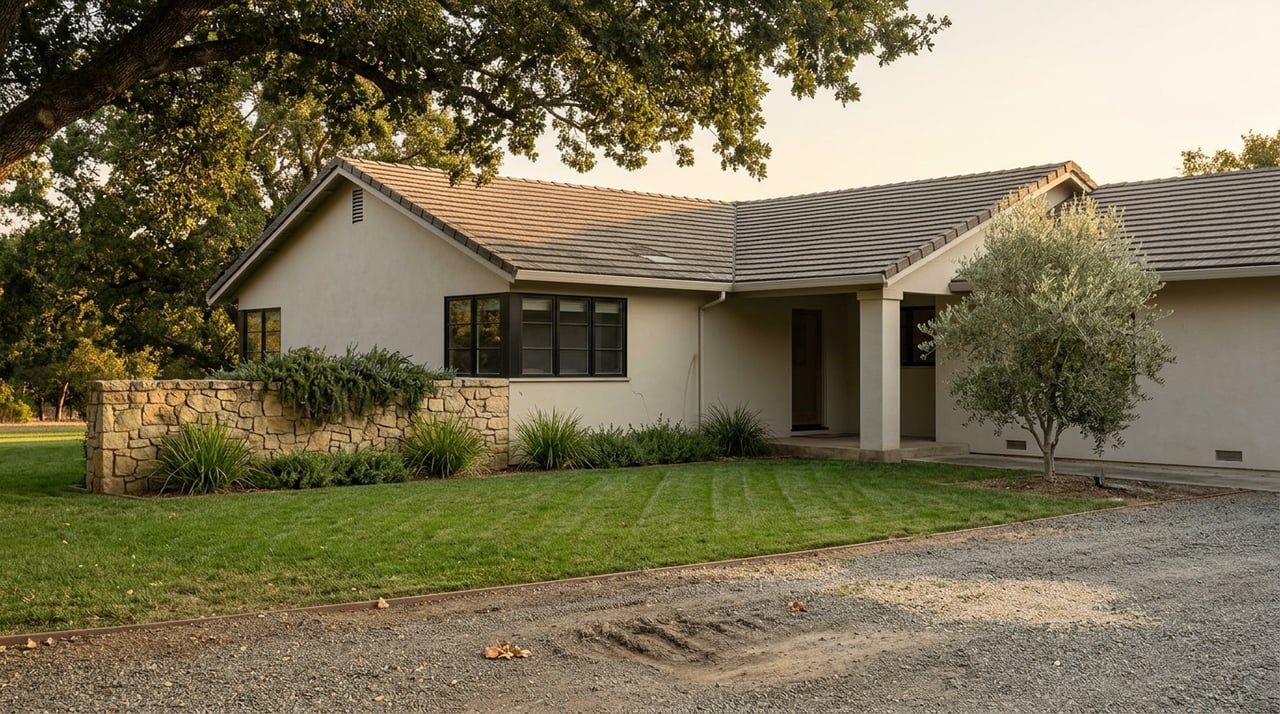
Two houses on Rockville Road can close escrow in the same month, sit forty yards apart on the same stretch of road, and go through entirely different septic reviews. One buyer's lender sends a licensed evaluator to locate the tank, run a flow test, and file a written report before funding releases. The other buyer's lender never asks a single question about the septic system. Same road, same soil, same Solano County jurisdiction. The difference traces back to one document: the loan application.
That split catches most Green Valley sellers off guard, and it should. Solano County has never written that requirement for standard systems either.
What Solano County Actually Regulates
Chapter 6.4 of the Solano County Code governs onsite sewage disposal, but its teeth are aimed at new construction, expansions, and repairs. A site evaluation, a percolation test, a construction permit through the Environmental Health Services Division. Nowhere in that chapter is there a transfer trigger that activates the moment a property changes hands.
The one place the county does require ongoing oversight is alternative septic systems, the newer engineered systems used on lots where a standard leach field won't perc. Those carry an annual operating permit, a yearly self-reported maintenance summary, and a professional performance evaluation every three years from a manufacturer-approved provider. That's a maintenance schedule, not a sale requirement, and it doesn't touch the conventional tank-and-leach-field systems that make up most of the housing along Rockville Road, homes largely built between the 1950s and the 1970s. Closed sales in the corridor this year alone have included houses built in 1954, 1971, 1973, and 1974, the exact era when clay pipe and undersized original tanks show up most often.
Compare that to counties that went a different direction. Santa Cruz County built a genuine point-of-sale trigger into its code, requiring a completed OWTS inspection report and disclosure form before rural property transfers close, a rule that took effect in 2023. According to KDS Homebuyers, Sacramento, El Dorado, and Placer counties layer on similar sale-triggered reviews through their own environmental health departments. Solano didn't follow that model. For a standard system in Green Valley, there is no county form standing between a signed purchase agreement and a recorded deed.
So Who Actually Forces the Question
If the county isn't the gatekeeper, the buyer's mortgage program is.
According to Mortgage Research, a conventional loan through Fannie Mae or Freddie Mac treats the septic system as background information. The lender only orders an inspection if an appraiser, agent, or another party flags something specific. Otherwise the file closes without anyone certifying tank condition or leach field capacity at all.
FHA changes the math. According to FHA.com, the appraiser has to look for visible signs of septic failure, and if something looks wrong, the loan can't fund until repairs happen or a further inspection clears it. Well water on an FHA file may require testing, and the well has to meet applicable distance and flow standards.
VA loans run on a related but separate track. Septic reviews and well-water testing may be part of the loan review.
Here's the comparison in one place:
| Loan Type | Septic Inspection Trigger | Well Water Test |
|---|---|---|
| Conventional | Only if a hazard is flagged | Not standard |
| FHA | Required if visible failure signs exist | Testing may be required |
| VA | A review may be required | Water testing may be required |
Different purchase agreements can lead to different septic outcomes, and none of it comes from a Solano County office.
Why the Gap Matters More Here Than It Sounds
Green Valley's Rockville corridor draws a mixed buyer pool: local move-up families, relocating households from the Bay Area, and military families tied to Travis AFB who lean heavily on VA financing. A seller who assumes "the county will catch it" if something's wrong with the septic system is assuming a safety net that doesn't exist for most of that buyer pool, and assuming the wrong thing entirely for a cash buyer, who answers to no lender at all.
The system doesn't fail based on what a seller assumed. It fails based on what's actually in the ground, and the loan a specific buyer happens to bring to the table decides whether anyone finds out before or after closing.
What the Missing Mandate Doesn't Excuse
The absence of a county inspection requirement doesn't touch a seller's disclosure obligation. California's Transfer Disclosure Statement still asks directly about known septic and well issues. What's missing is a forcing mechanism, not a legal duty.
Getting Ahead of a Loan You Don't Control
A seller can't know in advance whether the eventual buyer will finance with cash, conventional, FHA, VA, or USDA terms. The property could attract any of them. The more reliable move is to treat the septic system the way a USDA underwriter would, before any underwriter asks.
- Order a pre-listing septic evaluation with a written report, including tank location, condition, and leach field capacity.
- If the property is on a private well, get a current water quality test on file so it's ready regardless of which loan program shows up.
- Pull together pumping records and service history into one folder buyers and appraisers can review early.
- Confirm the age and material of the tank and leach field lines in writing, especially on anything built before 1975.
None of this is required by Solano County. All of it removes the guesswork a buyer's lender would otherwise create in the middle of your escrow.
A Short FAQ
Does Solano County require well water testing before a sale? No blanket county requirement exists. Individual loan programs, particularly FHA, VA, and USDA, can require their own water testing within their standard timelines.
What if my buyer is paying cash? A cash buyer isn't bound by any lender's septic or water rules. Many still order their own inspection as ordinary due diligence.
How old are the septic systems along Rockville Road? Recent closed sales in the corridor included homes built in 1954, 1971, 1973, and 1974, an age range where original tank materials are common enough to warrant a look before listing rather than after an offer arrives.
Does having an alternative septic system change anything? Yes. Alternative systems already carry an annual operating permit and a three-year professional evaluation under county code, so those records already exist and should be gathered for escrow no matter how the buyer finances the purchase.
Selling or buying a well-and-septic property in Green Valley means the real due diligence starts before any lender gets involved, not after. Michael Hulsey & Associates has walked Rockville corridor sellers and Travis AFB families through exactly this kind of timeline more than once. If you're weighing a listing in Green Valley, get a straight answer on where you stand first. Get Your Free Home Valuation.
This article is general information, not legal, tax or financial advice. Consult a qualified professional about your situation.